29 December 2024
Families: Our School of Love
Jesus chose to be born into a family, not through a miraculous act or a display of divine power, but as a deliberate way to consecrate the family. By becoming part of the Holy Family (Joseph, Mary, and Himself) Jesus consecrated the institution of a family. When something (or someone) is consecrated, it is said to be sacred and set apart for God’s purposes. For example, sacred vessels used at the Eucharistic Celebration are reserved only to hold the precious Body and Blood of Christ. Similarly, the family is set aside to reflect His presence and serve as a means of His redemptive work in the world.
Pope St John Paul II calls the family “the first and fundamental school of social living: as a community of love, it finds in self-giving the law that guides it and makes it grow” (Familiaris Consortio #37). Families are where we learn to practice sanctifying love; self-giving that draws us closer to God and transforms us in holiness. We are made in the image of God, who exists as a communion of persons in the Trinity. Therefore, we are made to be in union with others. Though sin often tempts us to selfishness, the family challenges us to give of ourselves for the good of others. In doing so, we embody Jesus’ words: “No one has greater love than this, to lay down one’s life for one’s friends” (John 15:13). By living out sanctifying love in our families, we are purified, grow in holiness, and reflect the divine communion for which we are created.
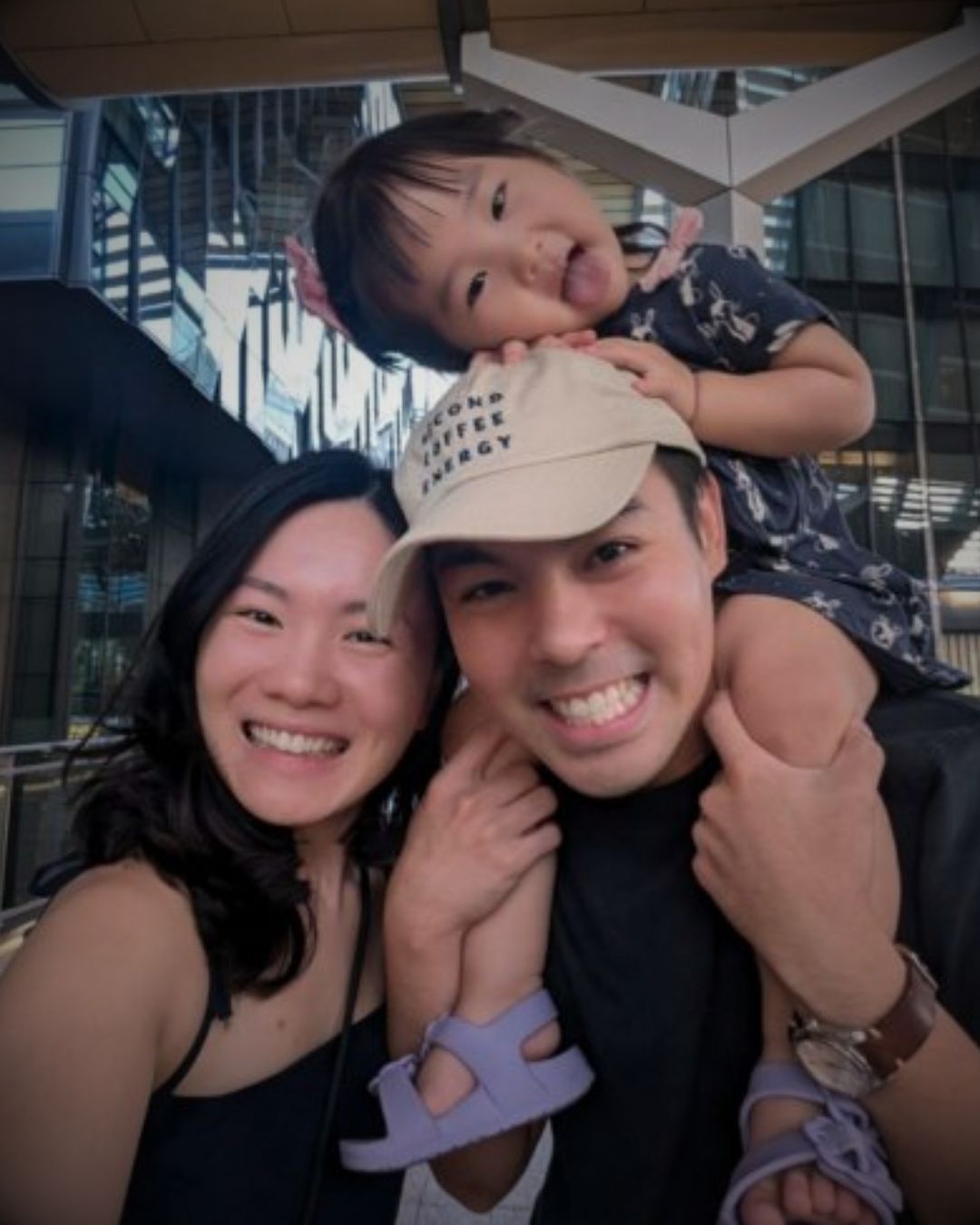
As a husband of three years and a father to a young daughter, everyday life is a chance to practice this sanctifying love. Marriage is not easy; the Catechism of the Catholic Church admits that “It can seem difficult, even impossible, to bind oneself for life to another human being” (CCC 1648). We look at elderly couples who enjoy a happy marriage with great respect and admiration. For my wife and I, we were 2 very different persons who now had to learn to live together. This involved catering to each other’s needs and wants, accepting our differing habits, and building a home together. When arguments inevitably arise, we must respect each other’s personal dignity. We strive to find compromise instead of demanding that things go my way.
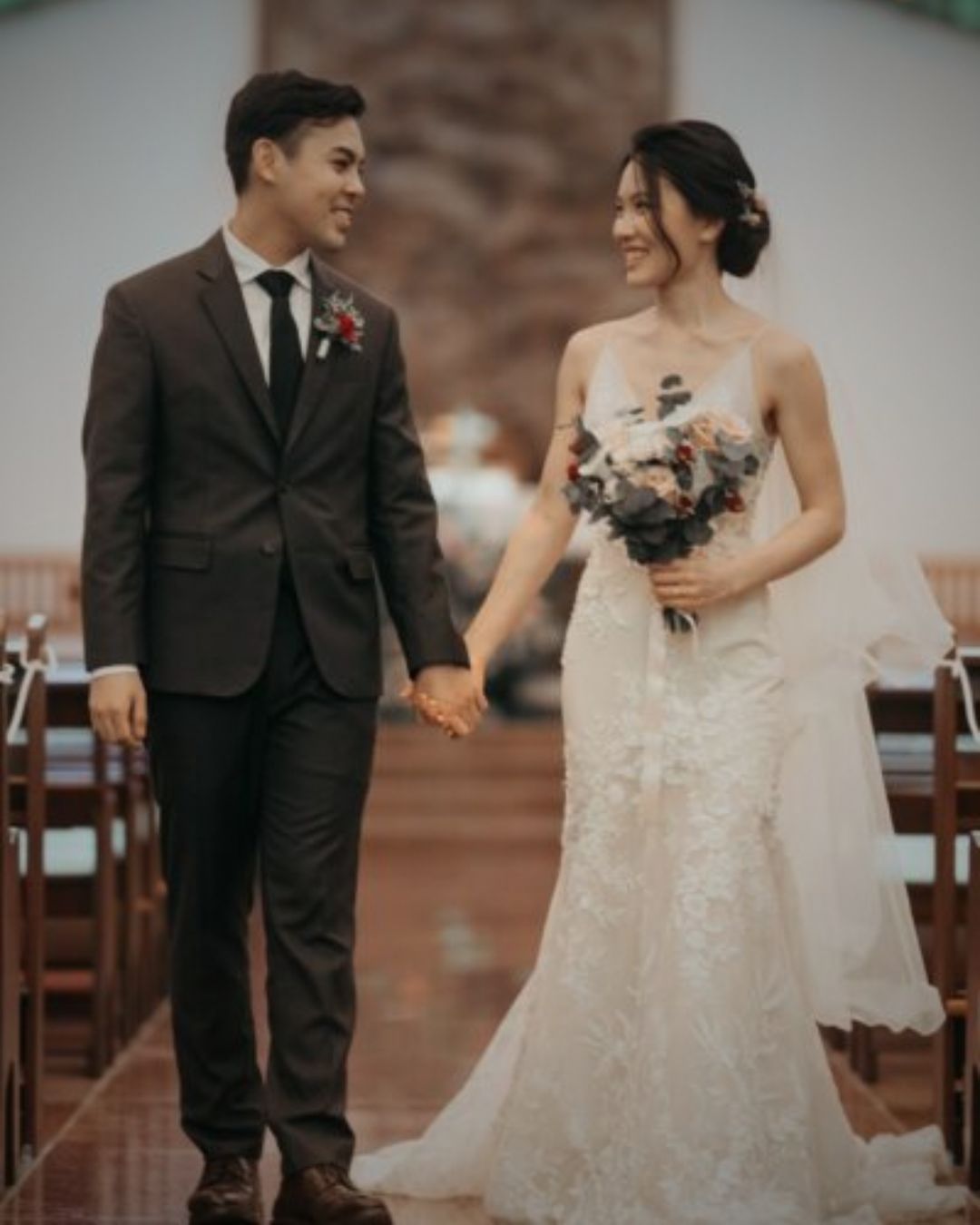
As an example: My wife and I have fairly different ways of winding down at night. I enjoy having my own space to play video games or read, while her love language is quality time. She cherishes nothing more than engaging in a shared activity. Naturally, our differing preferences sometimes cause conflicts. For instance, I may get too engrossed in a game and neglect our shared time together, leading her to seemingly “act up.”
In the past, I’d get upset and think, “Why is she being unreasonable? Doesn’t she understand that I need my me-time?” Thankfully, I’ve learned that her “acting up” is simply a reaction to her needs not being met, much like how I’d get “hangry” (angry-hungry) when I go too long without food. She’s letting me know, in her way, that she needs my attention.
These moments are opportunities for me to choose to die to myself, give up my me-time, and make sure her needs are fulfilled.
At the same time, my wife understands my love for watching football matches. She chooses to love me by giving up her preference for going to bed together on some nights so I can watch the game.
Love, after all, is a virtue. Virtues are habits, and habits become easier with practice. Each time I choose to love my wife over myself, it gets just a little easier, shaping me into a better husband and person. With God’s help, my imperfections that do not bear fruit are pruned away (John 15:2), and I would like to think that I am doing the same for my wife. Together, we grow in patience, understanding, and charity. Together, we help each other attain holiness.
As my wife and I settled into the rhythm of married life, we soon found ourselves embarking on another transformative journey: parenthood. Learning that we were expecting a child (on Christmas Eve 2021 nonetheless) was a great shock to us. We had not planned to have a child so soon, being only a month into our marriage. But God had other plans. We welcomed our little daughter into the world on the Solemnity of the Assumption of the Blessed Virgin Mary. We chose the name “Hannah” for her, which comes from the Hebrew word for “grace.” She has indeed been a beautiful grace from God.
Naturally, the first year was physically and emotionally the hardest. Night feeds, unconsolable crying, and dealing with “poonamis” (poo-tsunamis, where Hannah produces so much excrement that spills out of her diapers) truly tested us. I vividly recall my wife once waking me up to assist her. Barely awake after too little rest, I stumbled back to the bedroom, thinking it was still night. I only realised that it was midday when my wife pointed out that the sun was shining brightly in the sky.
Parenthood has also brought profound spiritual insights. I once heard a podcast presenter reflect on Matthew 25:31-46: In today’s modern, urban society, we rarely encounter opportunities to feed the hungry, give drink to the thirsty, or clothe the naked. Instead, it is our children whom we minister to in these ways. Hannah, having been baptised, has Christ present in her. By caring and nurturing her, I am serving Christ Himself.
Being a parent also gives me a concrete opportunity to evangelise. “Parents are the principal and first educators of their children” (CCC 1653), and it is our responsibility to ensure Hannah knows Jesus intellectually and personally. This journey with her has truly been a blast. I feel so proud whenever we bring Hannah for the Eucharistic Celebration and she excitedly points to the crucifix and exclaims “Big Jesus!” She affectionally calls St Anne “Jesus Popo” and St Joseph “Jesus Daddy”, and she never fails to remind me to maintain my silence in the Adoration Room.

Since Hannah was born on the Assumption, I’ve started a new birthday tradition with her this year. I bought her a bouquet of flowers for her birthday and I asked if she would like to offer them to “Mama Mary”. She readily agreed and when we went to the parish, she proudly laid the bouquet at the grotto before Our Lady’s statue. I hope that this is something that we will do each year on her birthday to help her build her relationship with Our Lady. Someone once told me that the greatest gift we can give our children is the gift of faith, and I cannot wait for her relationship with Christ and His Mother to grow and blossom.
One last point: as parents, we are our children’s first image of God. This is especially significant for me as the father, called to reflect the love of God our Father. Fatherhood, then, is another opportunity for my sanctification. The love that I show Hannah must be modelled after divine love: unconditional, sacrificial, and merciful. There is a common saying: “Fake it till you make it”. I hope that, by consistently acting lovingly, it will one day become effortless.
St Thomas Aquinas defines love as “willing the good of the other”. Love is primarily a free act and choice, not just a feeling, and marriage and fatherhood have certainly reinforced that idea. Jesus chose to enter our world through a family, where He grew in favour with God and man (Luke 2:52). On this Feast of the Holy Family, let us pray to Joseph, Mary, and Jesus for their help to protect and sustain our families. Let us remember always that our families are God’s great gift, offering us a space to grow together in love and holiness.
Jervis Kang

Main Line & Therapy Appointment
WhatsApp:
Pregnancy Crisis
& Support
WhatsApp:
Pro-Bono Counselling
Mon - Fri between 12pm – 4pm
Connect With Us
A Member Of

Copyright © 2026 Catholic Family Life. All rights reserved.